In the bustling train stations of Tokyo and the quiet kitchens of Kyoto, there exists a culinary tradition that defies Western expectations of meal temperature and freshness. The Japanese bento box, with its artful arrangement of cold components, represents not a compromise but a sophisticated philosophy of food preservation, flavor pairing, and cultural aesthetics that has been perfected over centuries.
The very essence of bento culture challenges the notion that a meal must be hot to be satisfying. This is not merely about convenience, though the portability of these meals is undoubtedly a factor in their enduring popularity. It is a deliberate culinary choice, rooted in a deep understanding of how flavors develop and interact over time. The Japanese palate appreciates the distinct, clean tastes of ingredients that are allowed to shine without the blanket of heat, which can often muddle subtle flavors and aromas.
At the heart of keeping a bento meal delicious without refrigeration for hours lies a time-honored preservation trifecta: salt, sugar, and acidity. These are not heavy-handed applications but nuanced techniques woven into the preparation of each component. Salting, through ingredients like soy sauce, miso, or plain salt, draws out moisture from proteins and vegetables, creating an environment where harmful bacteria struggle to thrive. Think of shiozake, salt-grilled salmon, where the curing process not only preserves the fish but concentrates its umami richness, making it a bento staple.
Similarly, sugar, often in the form of mirin (sweet rice wine) or plain sugar, acts as a humectant, binding water molecules and reducing the water activity available for microbial growth. This is evident in classic dishes like tsukune (sweetened chicken meatballs) or vegetables simmered in a sweet-soy nimono style. The sugar caramelizes slightly, adding a glossy sheen and a depth of flavor that is perfectly balanced at room temperature.
Perhaps the most crucial element is acidity. A splash of rice vinegar in the sushi rice not only seasons it but significantly lowers its pH, acting as a natural preservative. Pickles, or tsukemono, are the quintessential example. Whether it's crunchy takuan (daikon radish pickles), tangy umeboshi (pickled plum), or quick-pickled cucumber, these acidic side dishes are bactericidal powerhouses. The iconic umeboshi, often placed atop a bed of rice in the center of a bento, was historically believed to protect the entire meal from spoilage, earning it the nickname "the guardian of the bento."
Beyond these chemical guardians, technique plays an equally vital role. Ingredients are always cooked thoroughly to eliminate initial bacteria and are then cooled rapidly and completely before the box is assembled. This rapid cooling is critical; it prevents the food from lingering in the "danger zone" temperatures where bacteria multiply most rapidly. A key rule in bento preparation is that everything must be stone-cold before the lid is closed. Any residual warmth would create steam inside the sealed container, creating a humid environment perfect for spoilage and turning crisp textures soggy.
The philosophy extends to the careful selection and separation of components. A well-made bento is a masterpiece of compartmentalization, both in physical design and culinary science. Juicy items are kept away from dry, crispy ones. Sauces are often packed in separate tiny containers to be added just before eating, preventing everything from becoming a sodden mess. This meticulous partitioning ensures that each element maintains its intended texture and integrity for hours.
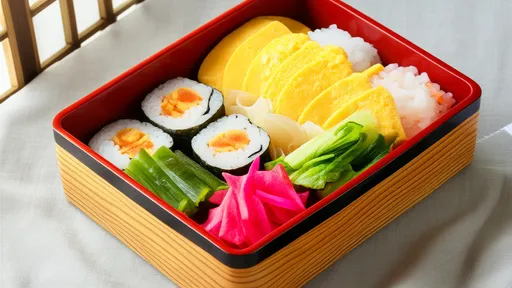
But the magic of a bento is not just in its safety; it's in its harmony. The arrangement follows principles of balance—goshiki (five colors) and gomi (five tastes). A typical box will strive to include something red (e.g., carrot, salmon), yellow (e.g., egg, pickled radish), green (e.g., spinach, broccoli), black (e.g., seaweed, shiitake), and white (e.g., rice, tofu). This visual diversity ensures a wide range of nutrients and, just as importantly, a feast for the eyes. The tastes—sweet, salty, sour, bitter, and umami—are all represented to create a complete and satisfying eating experience that stimulates all the senses without overwhelming any single one.
The rice, the foundation of most bentos, is itself a study in preservation. Sushi rice, seasoned with vinegar, sugar, and salt, is uniquely suited to being eaten cold. The vinegar not only preserves it but gives it a firm, pleasant chewiness that plain steamed rice lacks when chilled. It acts as a neutral yet flavorful base that connects all the other elements.
Proteins are chosen and prepared with longevity in mind. Grilling, frying (karaage, tonkatsu), and simmering (nikujaga) are preferred methods that create a protective, flavorful crust or glaze. These methods render fats and seal in juices, making them palatable and moist even when cold. Dried fish flakes (okaka) or small, whole dried fish are also common, representing a traditional preservation method in its purest form.
Finally, the vessel itself contributes to the philosophy. Traditional wari-bento boxes, made of lacquered wood or, more commonly today, plastic, are designed with tight-fitting lids to minimize air exchange. Some modern, high-end bento boxes even incorporate innovative materials that claim to have anti-bacterial properties, showing how the ancient concern for freshness evolves with technology.
In conclusion, the Japanese bento is far more than a packed lunch. It is a portable expression of washoku (traditional Japanese cuisine) principles, embodying a profound respect for ingredients, seasonality, and well-being. Its ability to remain delicious, safe, and visually appealing for hours at ambient temperature is not a happy accident but the result of a sophisticated, holistic culinary science. It is a testament to a culture that has mastered the art of creating harmony and balance, not just on a plate, but in a small, compartmentalized box that contains an entire philosophy of eating.
By /Aug 20, 2025

By /Aug 20, 2025
By /Aug 20, 2025

By /Aug 20, 2025

By /Aug 20, 2025

By /Aug 20, 2025
By /Aug 20, 2025
By /Aug 20, 2025

By /Aug 20, 2025
By /Aug 20, 2025
By /Aug 20, 2025
By /Aug 20, 2025
By /Aug 20, 2025
By /Aug 20, 2025
By /Aug 20, 2025
By /Aug 20, 2025
By /Aug 20, 2025
By /Aug 20, 2025
By /Aug 20, 2025

By /Aug 20, 2025
