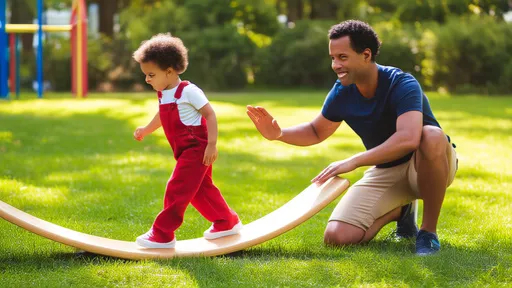
In the quiet of a suburban backyard, a father kneels on the grass, his hands outstretched as his toddler wobbles toward him with unsteady steps. The child’s laughter rings through the air, a sound as pure and uplifting as any symphony. This simple moment—an everyday scene playing out in countless homes—holds within it a profound truth: the power of interactive physical play between father and child extends far beyond mere amusement. It is a dynamic, living dialogue that shapes bodies, minds, and bonds in ways both visible and unseen.
For generations, the role of fathers in child-rearing was often narrowly defined, sometimes limited to that of a provider or disciplinarian. But the landscape of parenting is shifting. Modern research and evolving social norms have begun to highlight the irreplaceable value of a father’s active, engaged presence in a child’s life—especially through physical interaction. Play, in this context, becomes more than a pastime; it transforms into a critical medium for connection, learning, and growth.
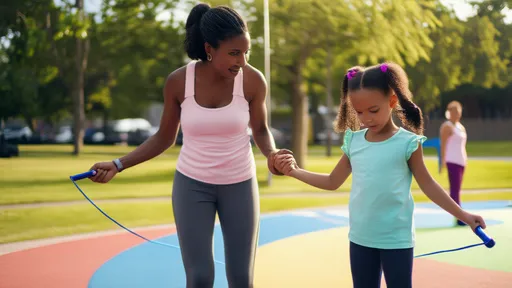
Interactive physical games—whether it’s a mock wrestling match on the living room rug, a game of catch in the park, or an obstacle course crafted from cushions and chairs—serve as a unique language between father and child. Unlike sedentary activities, these engagements are multisensory. They involve touch, movement, spatial awareness, and often, a healthy dose of laughter and exhilaration. Through this kinetic conversation, children learn to interpret non-verbal cues, build trust, and experience the joy of shared physical effort.
The benefits of such play are deeply rooted in child development science. From infancy, physical interaction helps stimulate neural pathways associated with motor skills, coordination, and even emotional regulation. When a father lifts his child into the air, he isn’t just eliciting giggles; he’s providing vestibular input that aids in balance and spatial orientation. When they roll a ball back and forth, they are honing hand-eye coordination and practicing turn-taking—a foundational social skill.
Perhaps one of the most significant aspects of father-child physical play is its role in building resilience and confidence. Fathers often engage in what researchers call "rough-and-tumble play"—a style that is physically active, slightly unpredictable, and emotionally charged. This type of interaction, when done in a safe and supportive context, teaches children how to navigate risk, manage excitement, and recover from minor setbacks. A child who is gently tossed and caught learns to trust not only their parent but also their own body. They learn that it’s okay to fall, as long as someone is there to help them back up.
Moreover, these playful encounters become a space for emotional expression. Physical play can serve as an outlet for pent-up energy, frustration, or anxiety. For a child who may not yet have the vocabulary to articulate complex feelings, a spirited game of tag or a playful chase can be incredibly cathartic. Fathers, too, often find that through physical engagement, they can communicate affection, pride, and support in ways that words sometimes fail to capture.
The impact of these interactions isn’t fleeting; it echoes into the future. Studies have shown that children who regularly engage in physical play with their fathers tend to exhibit better emotional regulation, stronger problem-solving abilities, and healthier social relationships. They are more likely to develop a positive self-image and a sense of security that stems from knowing they have a steadfast ally in their corner.
But the beauty of this dynamic lies in its simplicity. You don’t need expensive equipment or elaborate plans to foster this connection. It can happen in the span of ten minutes before dinner or during a lazy Sunday afternoon. The key is presence—the willingness to get down on the floor, to be fully engaged, and to follow the child’s lead. It’s in these unstructured, spontaneous moments that the magic truly unfolds.
In a world increasingly dominated by screens and schedules, the value of real, tactile interaction cannot be overstated. Fathers who prioritize physical play are not just entertaining their children; they are laying a foundation of health, trust, and mutual respect. They are building memories that their children will carry long into adulthood—memories of strong arms lifting them high, of shared laughter, and of the unshakable knowledge that they are loved, cherished, and capable of anything.
So, to every father out there: never underestimate the power of a game. Whether it’s airplane rides, piggyback races, or a simple hug that turns into a spinning dance, you are doing more than playing. You are teaching, healing, and connecting in the most human way possible. And in return, you are not just shaping your child’s world—you are enriching your own.
By /Aug 25, 2025

By /Aug 25, 2025

By /Aug 25, 2025

By /Aug 25, 2025

By /Aug 25, 2025

By /Aug 25, 2025
By /Aug 25, 2025

By /Aug 25, 2025

By /Aug 25, 2025

By /Aug 25, 2025
By /Aug 25, 2025

By /Aug 25, 2025

By /Aug 25, 2025

By /Aug 25, 2025

By /Aug 25, 2025

By /Aug 25, 2025

By /Aug 25, 2025

By /Aug 25, 2025

By /Aug 25, 2025

By /Aug 25, 2025
