When it comes to strength training for women, the conversation around weight selection is often clouded by misconceptions that have persisted for far too long. Many women walk into the gym with a predetermined idea of what they should be lifting, influenced by outdated stereotypes and a culture that has historically discouraged them from embracing heavy weights. This has led to a landscape where confusion reigns, and potential progress is left on the table. It's time to dismantle these myths and approach the topic with clarity and evidence-based reasoning.
One of the most pervasive errors is the belief that lifting heavy will inevitably lead to a bulky, masculine physique. This fear is rooted in a misunderstanding of female physiology and the role of hormones in muscle development. Testosterone, the primary driver of significant muscle hypertrophy, is present in women at much lower levels than in men. Without pharmacological intervention, women simply do not have the hormonal profile to develop large, bulky muscles easily. Instead, lifting challenging weights promotes a toned, strong, and defined appearance, enhancing rather than obscuring feminine curves.
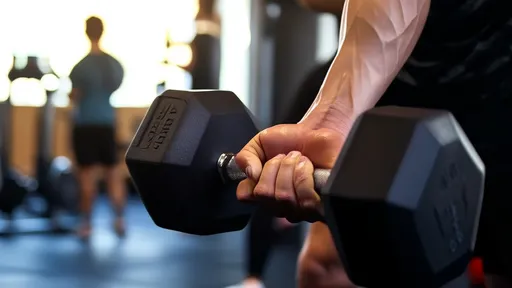
Another common pitfall is the over-reliance on light weights for high repetitions under the assumption that this is the optimal path to muscle tone and fat loss. While high-rep training has its place, exclusively using weights that do not challenge the neuromuscular system leads to a plateau in strength and muscular development. The body adapts to stress; if the stress is insufficient, results stagnate. True muscle tone is the product of muscle development and low body fat, both of which are best achieved through a combination of progressive overload in strength training and proper nutrition, not from endless repetitions with insignificant resistance.
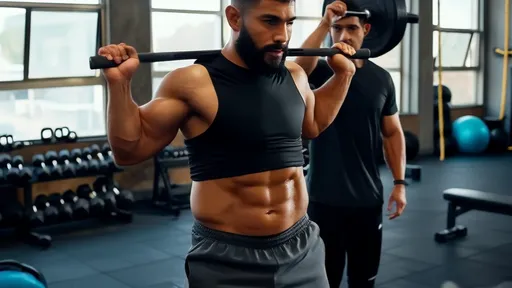
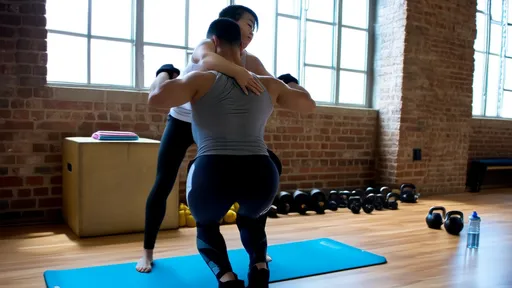
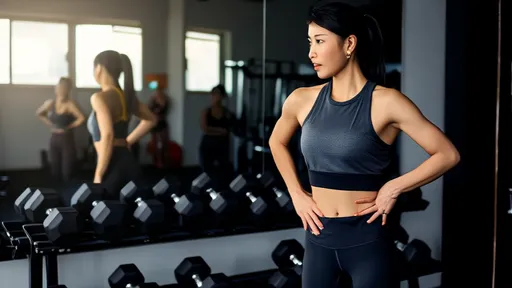
The intimidation factor of the free weights area cannot be overlooked. Many women, particularly beginners, gravitate towards machine-based circuits or group fitness classes that utilize light dumbbells, avoiding the barbells and heavier dumbbells often dominated by male lifters. This creates a self-fulfilling prophecy where a lack of exposure and practice perpetuates the feeling of being an outsider. Consequently, they miss out on the fundamental, compound movements—like squats, deadlifts, and presses—that offer the most significant return on investment for strength, metabolic health, and body composition.
A related mistake is using a weight that allows for perfect form for fifteen or more repetitions but never venturing into a range where the last few reps are a genuine struggle. Form is paramount for safety, but it should not be used as an excuse to avoid intensity. Proficiency is developed by practicing movements under load. Learning to maintain good form while fatigued is a crucial skill. If the weight is never heavy enough to cause fatigue, then one is not training strength; they are practicing movement patterns. Strength is built in the difficult final reps of a set, where the nervous system and muscles are forced to adapt.
The influence of social media and fitness influencers has also skewed perceptions of appropriate weight selection. Scrolling through feeds, one often sees women performing exercises with seemingly light weights, emphasizing a "burn" or a "pump." This curated content rarely shows the heavy, foundational lifting that likely built their physique in the first place. It creates an illusion that results can be achieved without ever truly straining under a bar. This leads many astray, prioritizing the aesthetic of training—the colorful equipment and meticulous outfits—over the substantive work of progressively adding weight to the bar.
Furthermore, there is a widespread neglect of the principle of progressive overload—the gradual increase of stress placed upon the body during exercise. Women often find a comfortable weight and stick with it for months, even years. They become proficient at lifting that weight for high reps but make no physical improvements because the body has long since adapted to the demand. Strength is a journey, not a destination. It requires a deliberate and consistent strategy to increase the demand, whether by adding weight, performing more repetitions, or improving technique with the existing weight.
Finally, the biggest error might be the internalization of these myths to the point where they limit potential. The barrier is often more psychological than physical. Choosing a weight is not just a physical decision; it's a mental one. It reflects one's self-belief and goals. Embracing heavier weights is an act of confidence. It is a declaration that one's purpose in the gym is to become capable and powerful, not just to burn calories or conform to a narrow aesthetic ideal. The bar does not care about gender; it only responds to force. When women understand that, they unlock a new realm of physical and mental strength.

By /Aug 25, 2025

By /Aug 25, 2025

By /Aug 25, 2025
By /Aug 25, 2025
By /Aug 25, 2025

By /Aug 25, 2025
By /Aug 25, 2025

By /Aug 25, 2025
By /Aug 25, 2025
By /Aug 25, 2025
By /Aug 25, 2025
By /Aug 25, 2025

By /Aug 25, 2025

By /Aug 25, 2025

By /Aug 25, 2025
By /Aug 25, 2025
By /Aug 25, 2025

By /Aug 25, 2025
By /Aug 25, 2025
By /Aug 25, 2025
